
The ten best UKGC-licensed real-money casinos, ranked by what they actually deliver
 Available in GB
Every casino on this page holds an active UK Gambling Commission licence, and the welcome offer at each one was checked against its current terms. The ranking rewards bonus fairness, payout integrity and game quality — in that order — because licence standing is the threshold, not the differentiator. Across the ten operators featured, the spread runs from wager-free free-spin offers that pay cash winnings, through 1x-trigger spin bundles, all the way to a 50x match bonus that sits well above the statutory ceiling. That spread tells you what is available, and what each structure actually costs you in time and turnover.

This page covers the current state of play as of 17 August 2026, with licence and bonus claims verified against the UK Gambling Commission public register and the operators’ published terms.
What separates a top UK real-money casino from the rest in 2026
A UK real-money casino is not just a website with slot games. The non-negotiable markers are a current UKGC licence, fast and verifiable payouts, a transparent return-to-player profile on the games you actually play, and bonus terms that do not quietly erase the value of the headline number. Four checks sit underneath every recommendation on this page.
Trust signals — what makes a UK gambling site safe and legitimate
The UKGC public register is the first stop. Any operator licensed in Great Britain appears on that register with an account number, a trading name and a current status. A search takes under a minute. An “active” status means the operator has passed fit-and-proper tests for its key personnel, holds segregated player funds, and is subject to ongoing compliance checks. If a site cannot be found on the register, it is not legally permitted to take bets from a player in England, Scotland or Wales.
GAMSTOP integration is the second signal. Every GB-licensed online operator must offer self-exclusion through GAMSTOP. A player who registers with GAMSTOP is blocked at every licensed site for the chosen exclusion period — six months, one year, or five years. A site without GAMSTOP is, by definition, not GB-licensed.
ADR — alternative dispute resolution — is the third. If a payout dispute arises, the player can escalate to an independent ADR provider approved by the UKGC. An offshore site carries no ADR route and no UK consumer-law protection. The point was put plainly by Costigan King, a London law firm tracking gambling regulation: “Excluding cryptocurrency from the licensed market does not prevent its use in gambling, it simply determines where that gambling takes place.” The same logic applies to every offshore casino — exclusion from the licensed market does not stop play, it just pushes the player outside UK regulatory protection.
Transparent T&Cs round it out. Wagering multiples, game-weighting rules, maximum cashout ceilings, validity windows and bonus-eligible games should all be readable without a magnifying glass. A welcome bonus buried in thirty pages of small print is a red flag, not a feature.
How we evaluate — the criteria behind every ranking on this page
Four measurable factors order the list. Licence standing comes first: every operator here is active on the UKGC register, and that is treated as a baseline, not a differentiator. Bonus terms and wagering fairness come second — the relative cost of clearing a welcome offer is the most direct measure of what the operator actually gives back. Game variety and provider quality come third, and payout speed and banking options come fourth.
The shape of competitor pages on this topic clusters around high-authority affiliate listicles that review fifty-plus sites and surface a top ten through comparative tables. That structure works, and it is the one used here, but the comparative axis is sharpened by the post-January 2026 regulatory environment. The 10x wagering cap, the £5 and £2 stake limits by age, and the mandatory deposit-limit prompt have all shifted which bonus structures hold value and which quietly overcharge the player.
Your first real-money session — a step-by-step launch guide
Before any deposit:
- Confirm the operator’s licence on the UKGC public register — name, account number, active status.
- Set a deposit limit before funding the account. The prompt is now mandatory, but setting a hard ceiling before you see the casino lobby keeps the budget honest.
- Read the welcome offer’s three key terms: the wagering multiple, the bonus validity window, and the game-weighting rules. Anything you cannot read in plain English is a reason to walk away.
- Pick a low-volatility slot for the first session. Volatility describes how wins are distributed, not whether the casino pays out — low volatility means more frequent, smaller wins, which is the right shape for a session you are still learning how to manage.
The deposit-limit prompt became mandatory at every GB-licensed online casino on 31 October 2025. Players can decrease their limit at any time and the change applies immediately. An increase is subject to a cooling-off period. Treat both as part of the casino’s safety infrastructure, not as friction.
Top 10 UK casino picks for 2026 — ordered by bonus fairness and player terms
| Operator | UKGC Licence | Welcome Bonus | Free Spins | Wagering | Bonus Validity | Game Providers |
|---|---|---|---|---|---|---|
| PlayOJO | Active | Bet £10 Get 50 Free Spins | 50 | 0x (winnings paid as cash) | Spins expire 3 days after claim | Microgaming, NetEnt, Pragmatic Play, Yggdrasil |
| Sky Vegas | Active | 70 Free Spins (No Deposit) | 70 + 200 with £10 deposit | 0x | 7 Days | NetEnt, IGT, Novomatic, Evolution |
| Paddy Power Games | Active | 60 Free Spins (No Deposit) | 60 + 200 with £10 deposit | 0x | 7 Days | Playtech, IGT, NetEnt, Evolution |
| MrQ | Active | 200 Free Spins (Deposit & Spend £20) | 200 | 0x | 48 Hours | Pragmatic Play, Relax Gaming, Evolution |
| Bet365 | Active | Up to 500 Free Spins (Ticket-based wheel) | Up to 500 | 0x on Free Spins | 7 Days | Playtech, NetEnt, Microgaming, Evolution |
| BetMGM | Active | 200 Free Spins when you play £10 | 200 | 1x (trigger), 0x on winnings | 7 Days | Pragmatic Play, Evolution, Playtech, IGT |
| LeoVegas | Active | 50 Free Spins on Big Bass Splash | 50 | 1x (trigger), 0x on winnings | 7 Days (spins 3 days) | Evolution, NetEnt, Pragmatic Play, Play’n GO |
| Casumo | Active | 100% Match up to £100 + 50 Free Spins | 50 | 10x (Deposit + Bonus) | 30 Days | Evolution, NetEnt, Microgaming, Pragmatic Play |
| Grosvenor Casinos | Active | Deposit £20, Play with £40 | 0 | 10x (Deposit + Bonus) | 30 Days | Evolution, Playtech, IGT |
| Betway | Active | 100% Match up to £50 | 0 | 50x (Bonus) | 7 Days | Microgaming, NetEnt, Pragmatic Play, Evolution |
Paddy Power Games — 60 no-deposit free spins with zero wagering
Paddy Power Games is one of two featured operators offering both no-deposit spins and a deposit-triggered top-up, both at 0x wagering. The headline for Paddy Power is 60 free spins on registration with no deposit required, followed by 200 more once you deposit and stake £10. Spin value is £0.10 across both bundles. Winnings are paid in cash and carry no wagering requirement. Validity runs seven days.
The shape matters because it lets a player test the lobby without committing funds, then claim the larger spin bundle at the same zero-wagering terms. No-deposit spins have a thin conversion rate — the player sees roughly £6.00 in raw spin turnover across the 60 spins at £0.10 each — but they convert to nothing at all if the wagering is punitive, and here the wagering is zero. The deposit-gated 200 spins lift the raw turnover to about £20.00, again paid cash.
The trade-off is the eligible slot list, which varies across both bundles rather than pinning to a single title. A player with a specific slot in mind should check the eligible games list before claiming. Paddy Power Games is the right destination for a player who wants to sample the lobby with no-deposit spins before committing to a larger bundle.
Sky Vegas — 70 no-deposit free spins, zero wagering, instant access
Sky Vegas offers the largest no-deposit free-spin count in the featured set at 70, again at 0x wagering and again with 200 additional spins for a £10 deposit at the same zero-wagering terms. Eye of Horus features as a prominent eligible slot; the full eligible list varies. Spin value is £0.10. Validity runs seven days.
The maths is straightforward: 70 no-deposit spins at £0.10 produce £7.00 in raw spin turnover, paid as cash winnings. The 200 deposit-gated spins add another £20.00. There is no cashout cap on either bundle. For a player who values no-deposit access above all else, Sky Vegas sits at the top of that specific category.
The same eligible-slot caveat applies. A player hunting for a specific game should verify it appears on the Sky Vegas promotion page before registering. Where the eligible list aligns with what the player already wants to play, the offer delivers more raw spin exposure than any other in the featured set.
PlayOJO — 50 wager-free spins on Big Bass Bonanza, with no cap on cash winnings
PlayOJO built its brand on the principle that bonus winnings should pay as cash. The welcome offer delivers 50 free spins on Big Bass Bonanza — a slot returning 96.71% on player stakes — triggered by a £10 bet. Spin value is £0.10. Spins expire three days after claim. There is no maximum cashout cap on winnings, and 0x wagering applies throughout.
The combination of 96.71% RTP, £0.10 spin value and no win cap is what makes PlayOJO the most transparent free-spin offer on the page. A player who treats Big Bass Bonanza as the intended session game gets a clean offer with no hidden ceiling and no expiry games. The trade-off is the short three-day spin window — a player who registers and walks away for a week loses the spins entirely.
PlayOJO offers a straightforward, cash-based bonus structure that appeals to players who value transparency over headline-grabbing multipliers.
MrQ — 200 free spins for a £20 deposit, zero wagering, claimed within 48 hours
MrQ delivers the highest free-spin count for a single-deposit trigger in the featured set: 200 spins on Fishin’ Frenzy Even Bigger Fish after depositing and spending £20. Wagering is 0x. Spin value is £0.10. Validity runs 48 hours from credit.
The window is the constraint. A 48-hour claim window is the tightest in the set, and missing it forfeits the spins entirely. The player has to deposit, fund the session, and play through 200 spins at roughly 5 seconds per spin — about 17 minutes of continuous play — within two days of credit. The wagering is zero, but the timing is unforgiving.
MrQ is a strong choice for players who can clear the spin bundle quickly and prefer a high-volume offer without the burden of wagering requirements.
Bet365 — up to 500 free spins via a ticket wheel, and not a penny of wagering
Bet365 distributes its welcome offer through a ticket-based wheel: each ticket yields a spin count up to 500, on titles including Book of Horus. Spin value varies between £0.10 and £0.20 depending on the ticket result. Wagering is 0x on free-spin winnings. Validity runs seven days. A deposit and ticket system is required to participate.
The variable structure is what makes this offer distinctive. The maximum 500 spins is the largest potential haul in the featured set, but the realised count depends on the wheel. A player who values the headline number should treat 500 as a ceiling rather than a typical outcome. Even at the £0.10 floor across 500 spins, the raw turnover is £50.00 paid cash with no wagering — a substantial figure against any other welcome offer on this page.
Bet365 provides an engaging, gamified welcome offer that rewards regular play, provided the player is comfortable with the variable nature of a ticket-wheel bonus.
BetMGM — 200 free spins unlock when you play £10, with 0x wagering on every win
BetMGM runs a low-barrier free-spin offer: 200 spins on Big Bass Splash unlock when you play £10, with 1x wagering to trigger the spins and 0x wagering on spin winnings thereafter. Big Bass Splash returns 96.71% on player stakes. Spin value is £0.10. The wagering window runs seven days.
The two-stage structure is the design choice here. The player must play through £10 before the spins unlock — a low bar — then the spin winnings pay cash with no further turnover. The seven-day window is generous relative to PlayOJO’s three-day spin expiry.
BetMGM is an effective option for players seeking a combination of a low-cost trigger and the high potential of Big Bass Splash, backed by zero-wagering winnings.
LeoVegas — 50 free spins on Big Bass Splash, 0x wagering, play £10 to trigger
LeoVegas delivers 50 free spins on Big Bass Splash — also at 96.71% RTP — after a £10 deposit. The wagering structure mirrors BetMGM: 1x to trigger spins, 0x on winnings thereafter. Spin value is £0.10. Spins expire three days after credit, and the wagering window runs seven days.
The smaller spin count against BetMGM is the visible difference; the operator profile otherwise overlaps. LeoVegas positions itself as a mobile-first brand, and the welcome offer reflects that orientation. The three-day spin window is the same constraint as PlayOJO — a player who does not use the spins in three days forfeits them.
LeoVegas is well-suited for mobile-first players who prioritise a smooth app experience and a clear, focused bonus structure over high-volume spin counts.
Casumo — a 100% match up to £100 plus 50 spins, cleared at the 2026 10x cap
Casumo is the only featured 100% deposit match aligned with the statutory 10x cap. A £100 deposit returns £100 in bonus funds plus 50 free spins, with 10x wagering on deposit plus bonus — meaning £2,000 of qualifying turnover. Validity runs 30 days, the longest in the featured set. Spin value is £0.10.
The 10x ceiling is the relevant benchmark. A £100 bonus at 10x means £1,000 of bonus turnover plus the £100 deposit on a deposit-plus-bonus basis, totalling £2,000 of qualifying wagers. At a 96.71% RTP slot, the expected loss on that turnover is roughly £66 — the cost of clearing the bonus in expected-value terms. The 30-day window gives the player time to spread the turnover without rushing through it.
Casumo suits a player who prefers a matched-deposit structure over a free-spin-only welcome and accepts the wagering cost as the price of a longer runway.
Grosvenor Casinos — deposit £20 and play with £40, 10x wagering, £2,000 max cashout
Grosvenor Casinos is the UK’s established high-street brand translated to online. The welcome offer is deposit £20, play with £40 — effectively a £20 bonus on top of the deposit. Wagering runs 10x on deposit plus bonus. Validity runs 30 days. There are no free spins. The headline clause is the £2,000 maximum cashout — the only explicit cashout ceiling in the featured set.
The £2,000 ceiling is the trade-off. A player who hits a meaningful win during the bonus window cannot withdraw more than £2,000 of bonus-derived winnings. The 10x wagering sits at the statutory cap and is comparable to Casumo, but the lack of free spins and the presence of the cashout ceiling position this offer behind Casumo on bonus value for a player who plans to clear on slots.
Grosvenor suits a player who wants the high-street brand’s reputation behind the welcome and is content with a table-game and live-dealer session rather than a slot-led approach.
Betway — a classic 100% match up to £50, but the 50x wagering tests its value
Betway runs a traditional 100% match up to £50. The wagering multiple is 50x — five times the statutory 10x cap. Validity runs seven days. No free spins are included in the standard welcome offer.
The 50x wagering is the issue. The offer sits well above the post-January 2026 ceiling and is flagged in the published terms as either grandfathered or under distinct T&Cs. For a player, the practical effect is that a £50 bonus demands £2,500 of qualifying turnover inside seven days. At a 96.71% RTP slot, the expected loss on that turnover is roughly £83 — more than the bonus amount. The seven-day window forces the player to clear the turnover quickly, which compounds the variance.
Betway suits a player who values the brand’s reputation and is content to decline the welcome offer, or to clear it on high-variance slots where short bursts of turnover can absorb the requirement. On raw bonus value, the offer is the weakest in the featured set.
UK gambling law in 2026 — the rules that protect your money
UK gambling regulation sits on a single statute — the Gambling Act 2005, extended by the 2014 Act — enforced by the UK Gambling Commission. Four changes have reshaped the market since 2025: the £5 and £2 stake caps for online slots, the 10x bonus wagering cap, the 40% Remote Gaming Duty, and the 1.1% statutory levy on gross gambling yield. Player winnings remain tax-free. Operating without a GB licence is a criminal offence.
The UK Gambling Commission — your single point of protection
The UKGC is the statutory regulator for Great Britain — England, Scotland and Wales. Northern Ireland operates under separate law and is not covered by the UKGC licensing scheme. A GB licence is compulsory at the point of consumption: any operator taking bets from a player in Great Britain must hold one. Operating without one is a criminal offence, punishable by up to 51 weeks’ imprisonment and an unlimited fine.

The UKGC maintains a public register. Every licensed operator appears on it with an account number, a trading name and a current status. An “active” status means the operator has passed fit-and-proper tests for its key personnel, holds segregated player funds and is subject to ongoing compliance checks. The register is the verification tool every player should use before depositing.
An offshore licence — Malta, Curaçao, the Isle of Man — is not a substitute. The regulator’s authority ends at its own jurisdiction. A player with a dispute on an offshore site has no UK ADR route and no UK consumer-law protection. The point is not that offshore sites are uniformly dishonest; the point is that they operate on their own house rules, and the player has no fallback when those rules work against them.
What UK law guarantees every real-money player in 2026
Stake caps apply to online slots. Players aged 25 and over face a £5 per-spin ceiling. Players aged 18 to 24 face a £2 per-spin ceiling. Both have been in force since April and May 2025. The cap applies to a single game cycle, not to a session — a £5 spin is £5, regardless of how many consecutive spins the player runs.
Deposit limits are mandatory. Since 31 October 2025, every GB-licensed online casino must prompt the player to set a deposit limit before the first deposit. Decreases apply immediately. Increases are subject to a cooling-off period. The prompt is not optional, and treating it as a feature rather than friction keeps the budget honest.
Vulnerability checks trigger at £150 net deposit over a rolling 30-day period. Since February 2025, operators must run financial vulnerability checks at that threshold — checks designed to identify players showing signs of harm, rather than blanket restrictions. The check is mandatory and the threshold is uniform across the licensed market.
Credit cards are banned. Since 14 April 2020, no GB-licensed operator can accept a credit card deposit. The ban is enforced at the payment-rail level through LCCP Licence Condition 6.1.2. A debit card, a bank transfer or an e-wallet are the available routes.
Responsible gambling — the tools that keep betting from crossing the line
The responsible gambling infrastructure in Great Britain is statutory, not optional. Three mandatory tools sit at the operator level — GAMSTOP self-exclusion, deposit limits and reality-check reminders — and a wider network of free, confidential services supports players outside the casino setting. The prevalence data behind these tools is sobering: 1.6% of adults experience at least moderate risk gambling (PGSI 3+), and 0.4% meet the threshold for problem gambling (PGSI 8+) per NHS data.
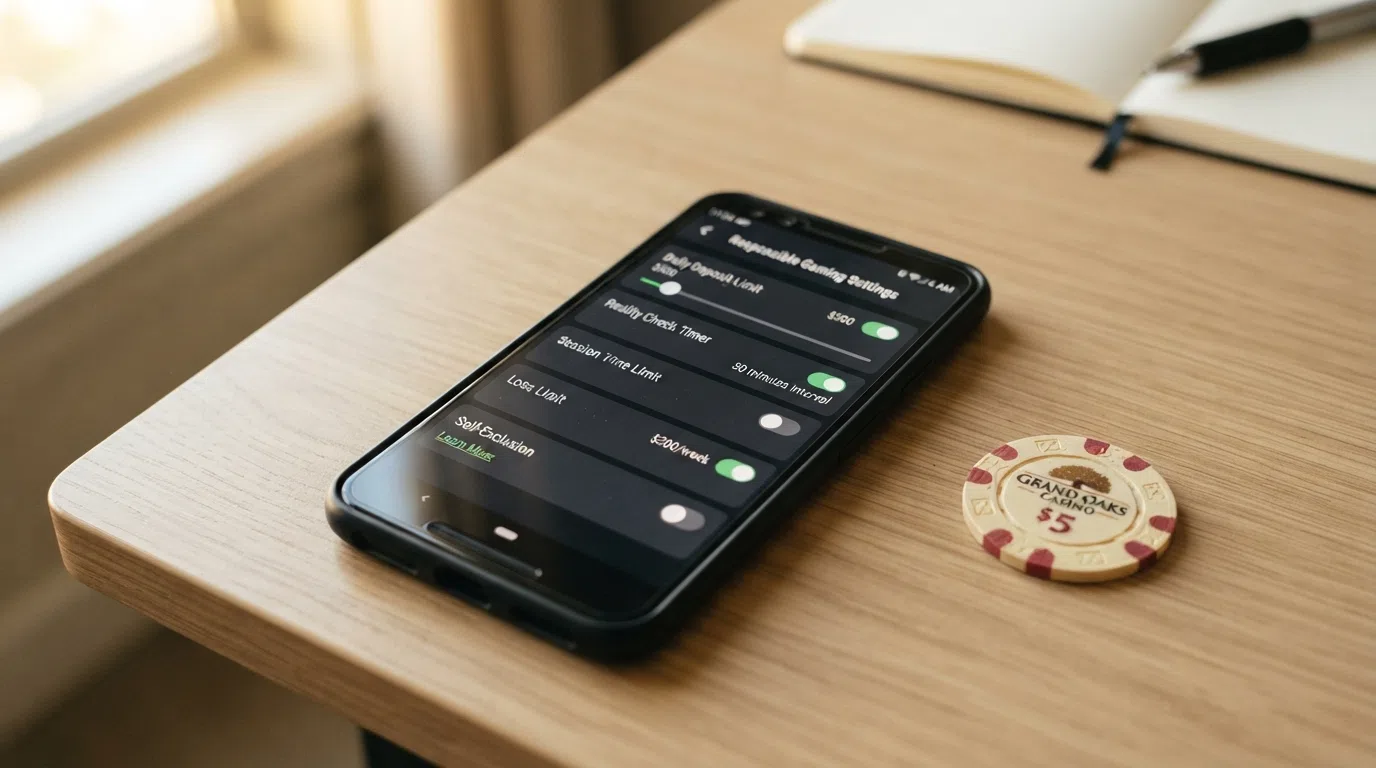
GAMSTOP, deposit limits, and reality checks — your built-in safety net
GAMSTOP is mandatory for every GB-licensed online operator. A player who registers with GAMSTOP is blocked at every licensed site for the chosen exclusion period — six months, one year or five years. Auto-renewal is available. The exclusion covers the entire licensed online market, which is what makes it effective: a single registration closes the door across every operator the player would otherwise have access to.
Deposit-limit controls are mandatory since 31 October 2025. The operator must prompt the player to set a deposit limit before the first deposit. A decrease applies immediately. An increase is subject to a cooling-off period. The cooling-off is designed to prevent a player from raising a limit on impulse after a session has gone badly.
Reality-check reminders are pop-up notifications at set intervals during a session. The player sees the elapsed time and the net position. The default interval varies by operator, and a player can shorten it. The point is not to interrupt play but to make the session visible to the player who is otherwise absorbed in it.
Where to get help — GamCare, the NHS, and the National Gambling Helpline
GamCare operates the National Gambling Helpline on 0808 8020 133, free and available 24 hours a day, seven days a week. The line is confidential and staffed by trained advisers. GamCare also runs online chat and group support for players and affected family members.
The NHS runs gambling harm clinics in England, Scotland and Wales. Referral is typically through a GP, though some clinics accept self-referral. Treatment is free at the point of use. The clinics treat gambling harm as a health condition, not a moral failing, and the pathway is the same as for any other behavioural addiction.
GambleAware funds prevention and research. The organisation is transitioning to statutory commissioning under the 1.1% levy introduced on 6 April 2025. The shift formalises the funding stream and ties prevention work to the operator-level revenue that funds it.
If you are reading this page and the prevalence figures above apply to you or someone close to you, the helpline is the first call. There is no cost, no registration, and no consequence for reaching out before a problem is fully formed.
Why your 2026 casino bonus is worth less than the headline number
A headline bonus figure means nothing until you multiply it by the wagering requirement. A £100 bonus at 10x wagering demands £1,000 of qualifying turnover; at 50x, the same bonus demands £5,000. The 10x statutory cap introduced on 19 January 2026 lowered the ceiling, but it did not erase the gap between the headline and the realised value. The mathematics still run in the player’s favour only when the wagering is zero — and only two operators in the featured set sit at that level on every spin bundle.

The 10x wagering cap — how 2026 rules rewrote UK bonus maths
Before 19 January 2026, wagering multiples commonly ran at 35x to 50x on the bonus amount. A £100 bonus at 50x meant £5,000 of qualifying turnover — and the player had to clear that turnover inside a validity window that often ran seven days. The expected loss on £5,000 of turnover at a 96.71% RTP slot is roughly £165, more than the bonus itself. The bonus, in expected-value terms, was a loss.
The statutory cap reduced the maximum wagering on bonus funds to 10x. A £100 bonus at 10x now demands £1,000 of qualifying turnover (or £2,000 on a deposit-plus-bonus basis), and the expected loss on that turnover at 96.71% RTP drops to roughly £33. The cap reversed the sign of the bonus on a slot session — the expected value moved from negative to positive for the player who can clear the turnover cleanly.
Casumo and Grosvenor sit at the 10x ceiling on a deposit-plus-bonus basis. Betway still runs at 50x on its £50 match — an outlier above the cap, flagged in research as either grandfathered or operating under distinct T&Cs. The pattern across the featured set is clear: post-cap operators cluster at the ceiling, while pre-cap offers remain in circulation for legacy reasons. Savvy players compare these terms carefully, as the difference between a compliant 10x cap and an outlier 50x requirement can cost hundreds of pounds over the life of a bonus.
Wager-free versus low-wagering — which bonus structure leaves more in your pocket
Three structures compete in the featured set. Wager-free offers — PlayOJO, MrQ, Bet365, Paddy Power, Sky Vegas, and BetMGM and LeoVegas on winnings after the 1x trigger — pay spin winnings as cash. The player takes whatever the slot returns, less the house edge, and walks away.
Low-wagering 1x-trigger offers — BetMGM and LeoVegas — require the player to play through £10 before the spins unlock, then the spin winnings drop to 0x. The trigger cost is roughly £0.33 in expected loss at 96.71% RTP; the spin winnings are then paid cash.
Full-wagering offers — Casumo and Grosvenor at 10x on deposit plus bonus, Betway at 50x on bonus — require the player to turn over a multiple of the bonus amount before withdrawal. The expected loss on the turnover is the cost of clearing the bonus, and the cost is what separates a 10x offer from a 50x offer.
For a player who wants to keep the most of any win, wager-free is the structural winner. For a player who wants a matched deposit and accepts the wagering cost, 10x on deposit plus bonus is the post-cap benchmark. A 50x offer remains in the market but is structurally the weakest.
Bonus terms that quietly erase value — validity, game weighting, and max cashout
Validity windows range from 48 hours (MrQ) to 30 days (Casumo, Grosvenor). A short window compresses the turnover into a smaller time frame, which raises the session’s variance — the player has to absorb the wagering in a tighter window, and short windows make it harder to grind out the requirement. A 30-day window lets the player spread the turnover and manage variance.
Game weighting is the silent clause. Table games and live dealer are typically excluded from bonus clearing or weighted at 0%. A player who tries to clear a slot-targeted bonus on blackjack will make zero progress toward the wagering requirement. The eligible games list sits at the bottom of the bonus terms, and reading it before depositing is the difference between clearing the bonus and forfeiting it.
The £2,000 maximum cashout at Grosvenor Casinos is the only explicit cap in the featured set. The ceiling applies to bonus-derived winnings, not to deposits. A player who wins £5,000 from a Grosvenor bonus session can withdraw £2,000 of bonus-derived funds and keeps the rest subject to the bonus terms. The cap is rare in the broader market — most wager-free offers have no equivalent ceiling — but it is the kind of clause a player learns about only by reading the small print.
Getting paid — which UK casino payment method actually gets your money fastest
Withdrawal speed is determined less by the casino brand than by the payment method. A casino can process a PayPal withdrawal in minutes; the same operator may take three to five working days to clear a bank transfer. The credit-card ban closed off one route entirely in 2020. PayPal, debit cards and bank transfers remain the workhorses of UK deposits and withdrawals, with e-wallets and instant bank transfer growing in availability.
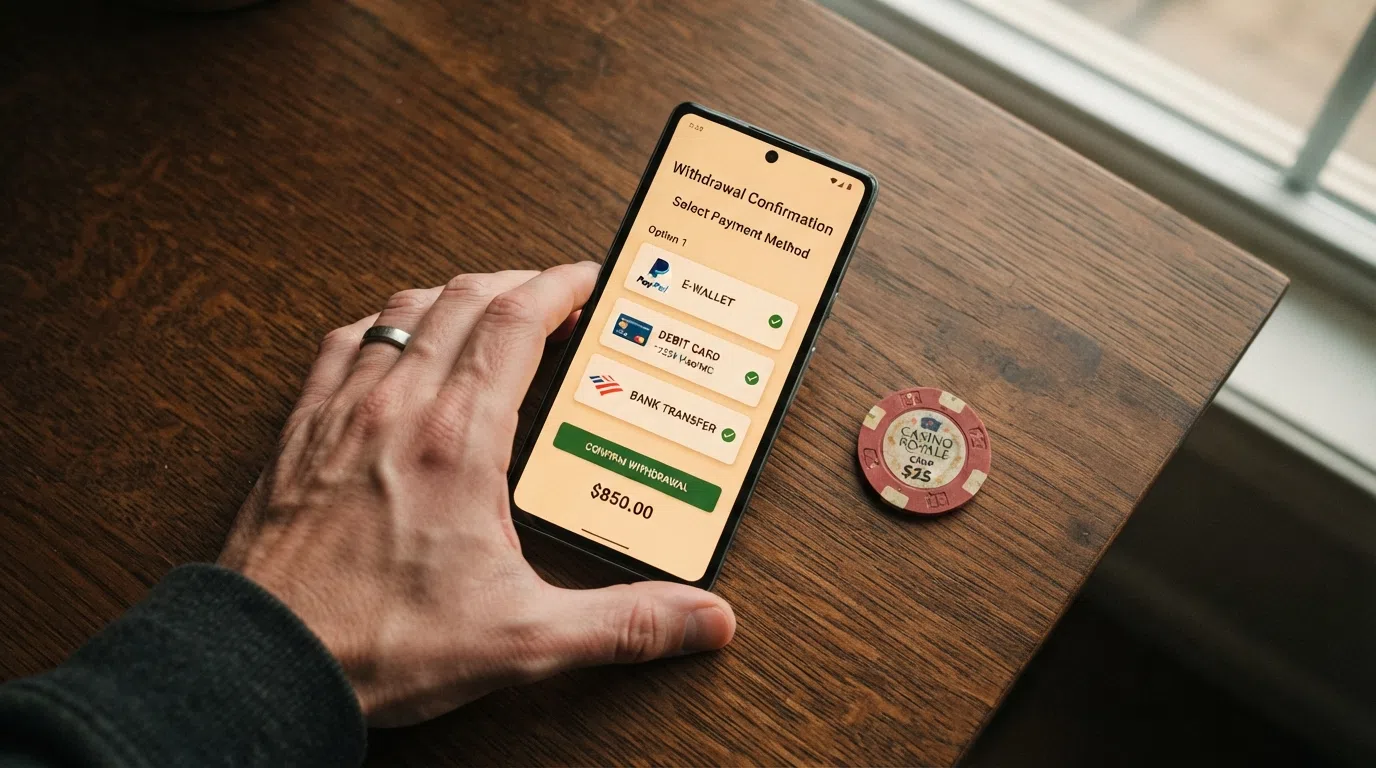
How debit cards, PayPal, and bank transfers work at UK gambling sites
Debit cards — Visa and Mastercard — are accepted universally at UKGC-licensed casinos. The credit-card ban under LCCP Licence Condition 6.1.2 means a credit card deposit will be declined at the payment rail. Visa debit and Mastercard debit remain available, and Visa Fast Funds is increasingly offered by operators for faster withdrawals.
PayPal availability varies across the featured set. PayPal is not a universal payment method at UKGC-licensed casinos, and operators that offer it tend to highlight the rail on their banking page. Where PayPal is supported, deposits are typically instant and withdrawals clear within hours after the operator-side pending period. Revolut is a related option for players using the Revolut card or app, though operator coverage varies.
Bank transfer is the universal fallback. Every UKGC-licensed casino accepts bank transfer deposits, and withdrawals are supported even at operators that lack PayPal integration. The cost is speed: a standard bank transfer withdrawal can take three to five working days to clear, with no operator-side shortcut.
How fast can you really get your money? Withdrawal speed by method
The operator-side pending period is the main bottleneck. A pending period is the time between requesting a withdrawal and the casino approving it — typically 24 to 48 hours, sometimes longer. During the pending period, the casino can reverse the withdrawal and return the funds to the player balance. A player who wants their money fastest reduces the pending period by completing account verification before the first withdrawal.
Visa Fast Funds is the rail-side accelerator. Where the operator supports it and the player’s bank participates, a Visa debit withdrawal can clear within minutes of approval. Coverage is not universal; not every UK bank has integrated Fast Funds, and not every operator routes through it.
PayPal and e-wallet withdrawals typically clear within hours of operator approval. The e-wallet rail is faster than bank transfer because the funds land in the e-wallet rather than the bank account, and the e-wallet-to-bank step is the player’s choice rather than the casino’s.
Bank transfer remains the slowest standard option. A three-to-five-working-day window is typical for first withdrawals and for banks without Faster Payments integration. A player who has not verified their account can expect the pending period to extend as the operator requests documentation.
The player’s end-to-end timeline runs from the withdrawal request to the cleared bank balance. The operator’s pending period plus the rail’s clearing window is the sum. A PayPal withdrawal with a 24-hour pending period can clear in well under a day; a bank transfer with a 48-hour pending period takes four to seven days total.
Mobile real-money casinos — apps versus browser play in the UK
Native casino apps for Android and iPhone are available across most of the featured set, and mobile-browser instant play via HTML5 has closed the gap on game selection, speed and reliability. The remaining differences are app-exclusive bonuses, push notifications, biometric login and the overhead of a download. For a player who plays occasionally, the browser is the cleaner option. For a player who plays regularly and values the convenience layer, the app earns its storage.

Casino apps for Android and iPhone — what the featured operators offer
App availability across the featured set covers the major operators, with native apps for both Android and iPhone typically published through the Google Play Store and the Apple App Store. The apps mirror the desktop lobby but add mobile-specific features: push notifications for promotions, biometric login through face ID or fingerprint, and touch-optimised slot interfaces.
App-exclusive bonuses are a recurring offer shape. Some operators reserve a portion of their free-spin or matched-deposit welcome for app users, on the theory that a player who has downloaded the app is a more committed user. The bonuses are not categorically larger than the desktop equivalent; they are simply differently distributed.
Download from official app stores only. Sideloaded APKs and apps distributed outside the official stores carry a malware risk that is not theoretical. The official stores verify publisher identity; the sideload route does not. A player who cannot find an operator’s app on the official store should treat the absence as a signal and play through the browser instead.
Mobile browser play — the case for skipping the download
HTML5 game compatibility across all modern mobile browsers has closed the gap with native apps on game selection, speed and reliability. A player who opens the casino lobby in Chrome or Safari on a recent iPhone or Android device sees the same catalogue as a desktop user, with the same game mechanics and the same RTP.
No storage overhead is the immediate benefit. A native casino app is typically 100 to 300 MB and updates itself periodically. A browser-based session consumes no permanent storage and no background resources. For a player with a storage-constrained phone, the browser is the obvious choice.
The same account, wallet and game catalogue work across desktop and mobile. A player who deposits on desktop and plays on mobile sees the same balance and the same bonus status. There is no separate mobile wallet, no separate bonus claim — the casino treats the account as one.
Performance parity on 4G and 5G connections is the closing argument. A modern HTML5 slot loads in under five seconds on a typical 4G connection and plays at 60 frames per second on a recent phone. The native app may be marginally faster in cold-start time, but the gap is small enough that a player who values storage over a one-second difference should pick the browser.
Crypto and UK casinos — the offshore loophole that costs you every protection
No UKGC-licensed casino accepts cryptocurrency deposits in 2026. The licensed market runs on fiat — debit cards, bank transfers, e-wallets — and the UKGC has not approved a crypto-rail operator. The regulator is exploring a stablecoin-only pathway aligned with the FCA crypto-regime, with expected clarity by October 2027. Until then, every crypto casino a UK player encounters is offshore and outside UK regulatory protection.
Offshore crypto casinos lack GAMSTOP, ADR and UK consumer-law protection. A player who deposits in Bitcoin or Ethereum at an offshore site has no self-exclusion route through GAMSTOP, no ADR escalation when a payout dispute arises, and no recourse under UK consumer law. The site operates under its own jurisdiction — Curaçao, Anjouan, occasionally Malta — and the player accepts that jurisdiction’s rules.
The trade-off is sharp. Crypto deposits are typically faster than debit cards, and crypto withdrawals can clear in minutes rather than days. The cost is the loss of every protection that the UKGC framework provides. As Costigan King noted, the exclusion of cryptocurrency from the licensed market “does not prevent its use in gambling, it simply determines where that gambling takes place.” The player trades UK protection for crypto convenience, and the choice is the player’s to make.
For a player who values the UK protections — GAMSTOP, ADR, segregated funds, vulnerability checks — fiat at a UKGC-licensed casino is the only path. For a player who has weighed the trade-off and accepts the offshore route, the regulator’s 2027 pathway may eventually bring crypto into the licensed market. Until then, the two options do not overlap.
Real-money casino games — where your odds are best and where the house wins hardest
Three game formats compete for the real-money pound at UK online casinos: online slots, table games and live dealer. Each carries a different house edge, a different pace and a different player experience. The RTP and volatility of a slot determine the long-run return and the shape of a session; the rules of a table game determine the house edge; the live dealer format combines real-time streaming with the pace of a casino floor.
How RTP, volatility, and stake limits shape every real-money spin
Return to player — RTP — is the long-run percentage of stakes that a slot returns to players. A 96.71% RTP means that, across millions of spins, the slot returns £96.71 for every £100 wagered. The remaining £3.29 is the house edge, distributed across every spin rather than concentrated in any single outcome.

Volatility describes how wins are distributed within that long-run return. A low-volatility slot pays out frequently, in small amounts — the session sees a steady drip of small wins that keeps the balance moving. A high-volatility slot pays out rarely, in large amounts — the session sees long dry spells punctuated by occasional large wins. The RTP is the same in expectation; the experience is different.
| Slot Title | RTP | Provider | Volatility |
|---|---|---|---|
| Big Bass Splash | 96.71% | Pragmatic Play | — |
| Big Bass Bonanza | 96.71% | Pragmatic Play | — |
The £5 stake cap for players aged 25 and over and the £2 cap for players aged 18 to 24 apply to every online slot spin. The cap is per game cycle, not per session. A player spinning at £5 across an evening has the same total stake as a player spinning at £2 across the same number of spins — but the per-spin exposure is different, and the £2 cap for younger players is the regulator’s view of what a session budget can safely absorb.
Progressive jackpots versus fixed-jackpot slots is the structural choice. A progressive jackpot grows with every spin across a network of casinos until it is won; a fixed-jackpot slot has a ceiling on the maximum payout. The progressive offers a larger ceiling; the fixed offers a tighter RTP and a more predictable session.
Megaways is a slot mechanic, not a game category. A Megaways slot varies the number of symbols on each reel on every spin, producing thousands of possible winning combinations per spin. The mechanic raises variance: the slot pays out more often but in less predictable amounts. The RTP is set by the developer and published in the game information panel.
Table games — blackjack, roulette, and where the house edge is smallest
Blackjack has the smallest house edge among the standard table games when played with basic strategy. Basic strategy is the published decision chart for every player hand against every dealer upcard — hit, stand, double down, split — and following it removes most of the house edge. A player who deviates from basic strategy raises the house edge quickly; the gap between optimal and average play is wider than at any other common table game.
European roulette uses a single zero and 37 pockets. American roulette uses a single zero, a double zero and 38 pockets. The extra pocket in American roulette raises the house edge by roughly two-and-a-half percentage points on every bet. A player who has a choice between the two formats should pick European roulette every time.
Baccarat has a player bet, a banker bet and a tie bet. The banker bet carries the smallest house edge; the tie bet carries the largest. A player who bets banker on every hand plays the closest thing to a coin-flip the table offers, with the house edge tilted slightly in the casino’s favour. Baccarat is a low-decision game — there is no strategy chart equivalent to basic blackjack — and the simplicity is the point.
Craps is a niche table option at UKGC-licensed sites. The game carries a wide range of bets with very different house edges. The pass line and don’t pass line bets carry a small house edge; the proposition bets in the centre of the table carry very large ones. A player who treats craps as a pass-line game plays a low-edge game; a player who ventures into the proposition bets pays for the entertainment.
Live dealer casino — the real-time table experience at UK online casinos
Live dealer games stream from purpose-built studios with human dealers, real cards and real roulette wheels. The player bets on the same outcome as in a digital table game, but the dealing is real-time and the dealer is visible. The pace is slower than a digital table — the dealer waits for player decisions and shuffles between rounds — and the experience approximates a casino floor.

Evolution is the dominant live dealer provider in the UK market and appears at nine of the ten featured operators: Betway, BetMGM, Paddy Power Games, Sky Vegas, Casumo, LeoVegas, MrQ, Grosvenor Casinos and Bet365. Playtech is the second studio and powers live tables at BetMGM, Paddy Power Games, Grosvenor Casinos and Bet365. The two studios cover nearly the entire featured set; a player who values live dealer can find Evolution or Playtech tables at every operator on this page.
Game-show formats are a growing live-dealer category. Evolution’s Crazy Time, Monopoly Live and Deal or No Deal Live blend slot-style mechanics with live-dealer hosting. The RTP is typically lower than a standard table game, and the variance is higher. A player who treats game-show formats as entertainment rather than as a low-edge game understands what they are buying.
New UK online casinos in 2026 — fresh sites worth a look, and the traps to avoid
Two new UKGC-licensed casinos went live in the second quarter of 2026: Betsuna, on a relaunch, and Betty UK, on a fresh licence. Both are visible on the UKGC register, both are subject to the same regulatory framework as the established operators on this page, and both face the same market conditions. A new launch is not a reason to choose one site over an established operator — it is a reason to apply the standard checks with more rigour.
What to check before depositing at a brand-new UK casino
- Confirm the UKGC licence is active and check its grant date. A licence granted this quarter is a recent licence; the operator has less compliance history than a five-year-old brand. The register shows the grant date alongside the status.
- Verify the game-provider roster covers the titles you play. A new casino may launch with a partial catalogue; a player who plays a specific slot should check that the title appears in the lobby before depositing.
- Check which payment methods are supported for deposit and withdrawal. PayPal and Visa Fast Funds are not universal; a player who values fast withdrawals should verify the operator supports the relevant rail.
- Look for player feedback and any ADR complaint history. A brand-new site has limited public feedback; an absence of complaints is uninformative on a six-month-old brand. The ADR provider’s published complaint log is the more reliable signal where one exists.
- Read the bonus terms for hidden wagering traps or unusually short validity. New casinos sometimes launch with aggressive welcome offers to build a player base. The wagering multiple, validity window and game-weighting rules should be visible without scrolling through thirty pages of small print.
A new casino that passes all five checks is a reasonable deposit; a new casino that fails any one is a site to revisit in six months once the operational track record has accumulated.
How we picked and ranked these real-money casinos — our methodology
Three sources underpin every ranking on this page: the UKGC public register, the operators’ published terms, and the published RTP data for the specific games featured in each welcome offer. The register confirms licence status and active trading. The terms confirm the wagering multiple, validity window, eligible games and any maximum cashout. The game data confirms the RTP for the slots where research provides a specific figure.
The ranking criteria are licence standing, bonus fairness under the 10x cap, game-provider depth and quality, and payout integrity. Licence standing is a baseline — every featured operator is active on the register, and the ranking treats that as a threshold. Bonus fairness is the primary differentiator: the wagering multiple, the spin-bundle structure and the validity window determine where the offer sits in the table. Game-provider depth covers both the breadth of the catalogue and the presence of Evolution or Playtech for live dealer. Payout integrity is qualitative — no operator on this page has a published track record of payout failures, and the absence is treated as a feature rather than a differentiator.
Exclusions are deliberate. Unlicensed operators are excluded by definition. Operators without verifiable UKGC status are excluded. Brands with opaque bonus terms — wagering multiples hidden behind opt-in flows, game-weighting rules that contradict the headline, validity windows measured in hours rather than days — are excluded. The set of ten operators is the intersection of the licensed market and the offers where the terms are readable in plain English.
The competitive context: common affiliate listicles typically review fifty or more sites and surface a top ten through comparative tables. The structure here follows the same shape, but the comparative axis is sharpened by the post-January 2026 regulatory environment — the 10x cap has reshaped which welcome offers hold value, and the ranking reflects that shift rather than the older 35x-to-50x norm.
Your next move — what to actually do with everything on this page
The single most important decision is the one before any deposit: verify the licence on the UKGC public register. The register takes under a minute to search, and the active status is the difference between a regulated operator with segregated funds, ADR, GAMSTOP and vulnerability checks, and an offshore site with none of those protections. Every other comparison on this page assumes that step is complete.
The bonus structure that holds the most value under the post-January 2026 10x cap is the wager-free spin offer. PlayOJO, MrQ, Bet365, Paddy Power Games, Sky Vegas and the winnings-stage of BetMGM and LeoVegas pay spin winnings as cash with no turnover. A player who clears one of these offers takes home whatever the slot returns, less the house edge, and walks away. The matched-deposit offers at 10x — Casumo and Grosvenor — are the next tier down, with a positive expected value on a slot session but a real cost in turnover. The 50x outlier at Betway is the weakest of the matched-deposit options, and the offer is a candidate to decline rather than accept.
The payment-method choice determines the cashout experience. PayPal clears in hours where supported. Visa Fast Funds clears in minutes where the operator routes through it. Bank transfer takes three to five working days. A player who values fast withdrawals picks the rail at deposit time, not at withdrawal time — operators lock the deposit rail as the default withdrawal rail unless the player switches.
The offshore trade-off is the closing point. An offshore casino — crypto or otherwise — can offer faster deposits and larger bonuses, but it cannot offer GAMSTOP, ADR or UK consumer-law protection. The absence is structural, not negotiable. A player who has weighed the trade-off and accepts the offshore route has made an informed choice. A player who has not is reading this page because the comparison is worth doing before the deposit.
Frequently asked questions about UK real-money casinos
What is the maximum stake for online slots in the UK for players over 25?
The maximum stake for online slots in the UK is £5 per spin for players aged 25 and over, and £2 per spin for players aged 18 to 24. Both caps apply to a single game cycle and have been in force since April and May 2025 under Gambling Act 2005 amendments enforced by the UK Gambling Commission.
Are online casino winnings tax-free in the UK?
Yes. Player winnings at UK-licensed online casinos are tax-free. The tax falls on the operator, not the player — Remote Gaming Duty runs at 40% of gross gaming yield since 1 April 2026, plus a 1.1% statutory levy on gross gambling yield since 6 April 2025. A player withdraws winnings in full, with no UK income-tax or capital-gains-tax liability.
How do I verify if a UK online casino is licensed by the UKGC?
Search the UK Gambling Commission’s public register for the operator’s trading name. The register shows the account number, the licence type, the current status and the grant date. An “active” status is the threshold for a legitimate GB-licensed operator. Any site that does not appear on the register is not legally permitted to take bets from players in England, Scotland or Wales.
What are the new wagering requirements for casino bonuses in 2026?
Since 19 January 2026, UKGC rules cap bonus wagering requirements at a maximum of 10x the bonus amount under LCCP 5.1.1. Pre-cap offers at 35x to 50x are no longer permitted for new bonuses, though some legacy offers remain in circulation at grandfathered terms. Across the featured set on this page, wager-free offers pay spin winnings as cash, and matched-deposit offers sit at the 10x ceiling.
Can I use a credit card to deposit at a UK online casino?
No. Credit cards have been banned for all remote gambling payments in Great Britain since 14 April 2020 under UKGC Licence Condition 6.1.2. The ban is enforced at the payment-rail level, and any credit card deposit will be declined. Debit cards, bank transfers and e-wallets are the available routes.
No-deposit free spins — free money or a clever filter?
Paddy Power Games and Sky Vegas offer no-deposit free spins at 60 and 70 respectively, both at £0.10 spin value and 0x wagering. The raw spin turnover is £6.00 at Paddy Power and £7.00 at Sky Vegas — paid as cash winnings, with no cashout cap. The seven-day validity window applies to both.
A no-deposit spin bundle is not a meaningful sum in absolute terms. The point is not the turnover; the point is the conversion. A 0x wagering structure pays whatever the spins return as cash. A 35x wagering structure requires the player to turn over the spin winnings thirty-five times before withdrawal — and at that point most of the expected value has already leaked out through the house edge.
The clever filter is the wagering multiple. No-deposit offers at 35x are common across the broader market. No-deposit offers at 0x are the exception. The featured set puts the filter in the player’s favour — a reader who follows this page to Paddy Power or Sky Vegas gets the spin exposure without the wagering trap.
Account – Real Money Online Casinos UK
Content created by the «Real Money Online Casinos UK» team